
The Istanbul gathering “A New Era in Breast Aesthetics: MIA Femtech & Preservé” opened a broader conversation about innovation in breast surgery. Rather than presenting new technology through procedure names, promotional promises or before-and-after imagery alone, the event placed women’s health, body perception, scientific progress and informed decision-making at the centre of the programme. Hosted by Dr Yakup Işık under the umbrella of Dr Emre İlhan Clinic at Swissôtel The Bosphorus, the evening brought together medical expertise, industry perspectives, content creators, invited guests and people interested in the changing language of women’s health.
MIA Femtech and Preservé represented the central theme of the night: a shift towards tissue-conscious, personalised and carefully controlled approaches in breast aesthetics. The programme moved from the women-centred vision behind MIA Femtech to emerging technologies in breast enhancement, from lived experiences shared by public figures and creators to breast cancer awareness. As a result, the event challenged the narrow assumption that breast aesthetics is only about changing appearance. It showed that aesthetic goals must be discussed alongside safety, anatomy, realistic expectations, psychology, lifestyle and long-term follow-up.
Stage conversations, panel sessions, experiential areas, networking moments and awareness messages were woven into one coherent programme. Complex medical subjects were communicated in an accessible and human way without removing the need for professional evaluation. One question became central: can beauty, science and women’s health genuinely meet at the same table? The programme’s answer was clear. They can, provided that accurate information, individual assessment and responsible communication remain the foundation.
From a Narrow Aesthetic Narrative to a Women’s Health Perspective
Breast aesthetics has often been discussed through cup size, cleavage or simplified before-and-after comparisons. Women’s decisions, however, are shaped by a far wider set of factors: congenital asymmetry, changes after pregnancy and breastfeeding, weight fluctuation, ageing, skin quality, personal identity and the way the body is experienced in everyday life. The event moved the conversation away from a single beauty ideal and towards a more complete understanding of health, wellbeing and individual choice.
A recurring principle throughout the programme was that no two bodies, goals or clinical histories are identical. The purpose of modern breast surgery is not to impose the same shape on every patient. It is to evaluate anatomy, tissue characteristics, lifestyle and the scale of the desired change together. In this model, “bigger” or “more dramatic” is no longer the automatic objective. The focus shifts towards proportion, body harmony, natural movement and an outcome that does not make the individual feel disconnected from her own body.
This perspective also changes the quality of communication. Responsible consultation cannot focus only on perceived advantages. It must explain limitations, candidate criteria, potential risks, recovery, alternatives and the possibility that a fashionable procedure may not be the right one. By placing clinical information beside lived experience, the event encouraged women to take a more active role in decision-making. The first question becomes not “Which method is newest?” but “Which approach, if any, fits my anatomy, health and expectations?”
A Programme Combining Science, Experience and Conversation at Swissôtel The Bosphorus
The setting at Swissôtel The Bosphorus supported both the scientific and social character of the evening. A branded stage, conversational panel layout and open networking flow created an environment that felt different from a conventional medical meeting. Guests were not limited to listening passively. They could observe, ask questions, compare viewpoints and engage with specialists and other attendees.

The event photography reflects this layered format. Medical and technological subjects were discussed on stage, while experience zones, beauty demonstrations, portrait areas, networking and live performance created a more dynamic rhythm. This balance illustrates an important principle in health communication: when scientific content is delivered in clear language and the audience experience is thoughtfully designed, complex subjects become more understandable and memorable.
Pink visual elements supported the women’s health theme, while the contemporary event design reinforced the technology-led identity of MIA Femtech and Preservé. More importantly, the programme turned a product-focused presentation into a platform for discussion and awareness.
MIA Femtech and the Concept of Breast Harmonisation
MIA Femtech is officially positioned as a minimally invasive breast harmonisation experience. The term “harmonisation” is important. It refers to planning an enhancement that works with the proportions of the body rather than treating volume as the only goal. In selected patients, the platform focuses on preserving breast tissue and sensation as much as possible, using an access strategy that avoids a visible scar on the breast and aiming for a shorter disruption to everyday life.
The women-centred vision discussed at the event showed that MIA Femtech is not simply a collection of surgical instruments. A contemporary breast aesthetics experience begins with consultation and continues through measurements, planning, expectation management, treatment and follow-up. The patient must have space to explain what she wants, while the surgeon must be prepared to state clearly what is realistic, what is not and why.
MIA Femtech is not automatically suitable for every patient. Significant ptosis, a desire for a major increase in volume, complex asymmetry, previous surgery or the need for additional lifting can require a different plan. Technological sophistication does not remove the need for candidate selection. One of the most valuable messages of the evening was that innovation only becomes meaningful when it is combined with individual medical judgement. A procedure name discovered online cannot replace a clinical assessment.
Preservé and the Tissue-Preservation Direction in Modern Breast Surgery
Preservé is positioned as a lower-impact breast enhancement approach designed to protect native breast tissue, anatomical support and sensation as much as possible. Official material describes a technique that aims to reduce disruption compared with conventional augmentation, using controlled preparation of the implant space and a planning philosophy centred on preserving natural structures. It reflects the wider movement towards preservation-focused surgery that has influenced several areas of aesthetic medicine.
The value of Preservé is not limited to a smaller incision or a shorter early recovery. The deeper objective is to plan shape and volume while respecting the existing organisation and character of the breast. This requires assessment of chest width, breast base, skin elasticity, native tissue, asymmetry and the scale of the desired change.
MIA Femtech and Preservé share a tissue-conscious vision, but they are not the same procedure. MIA is generally associated with subtle, proportion-led harmonisation in carefully selected patients. Preservé may enter the discussion when a broader implant-based plan is considered appropriate. Suitability for either approach must be determined by a qualified surgeon. The event helped move the conversation away from “Which one is the newest?” towards a more useful question: “Which method is relevant for which patient and which objective?”
| Topic | MIA Femtech | Preservé |
| Core approach | Minimally invasive breast harmonisation | Lower-impact, tissue-preserving breast enhancement planning |
| Primary objective | Subtle, proportion-led enhancement | Personalised shape/volume while preserving native tissue and support |
| Candidate profile | Carefully selected patients with suitable anatomy | Selected patients according to anatomy, tissue quality and goals |
| Shared principle | Tissue-conscious, personalised and controlled care | Tissue-conscious, personalised and controlled care |
| Important note | Not suitable for every patient; assessment required | Not suitable for every patient; assessment required |
Dr Yakup Işık’s Role as Host and the Dr Emre İlhan Clinic Framework
Dr Yakup Işık completed his specialist training in Plastic, Reconstructive and Aesthetic Surgery at Ege University after graduating from Atatürk University Faculty of Medicine. He gained clinical experience in different cities and hospitals and currently focuses on areas that include breast aesthetics, body contouring and facial surgery. He is recognised as one of the early adopters of MIA Femtech in Türkiye. That experience was reflected at the event not only through technical explanation, but also through a consistent emphasis on candidate selection, realistic outcomes and safe process management.
Organised under the umbrella of Dr Emre İlhan Clinic, the event reflected a multidisciplinary approach to aesthetic medicine. The quality of a procedure cannot be measured only by what happens in the operating room. Clear information, appropriate testing, personalised method selection, facility standards, follow-up and continuity of communication are part of the same clinical chain.
Dr Işık’s role on stage made this framework visible. A surgeon’s responsibility is not merely to describe a new technology, but also to explain when it may not be suitable. The tone of the evening avoided the one-size-fits-all marketing language often seen in cosmetic medicine. It encouraged women to ask questions, understand limitations and make decisions with specialist guidance rather than relying on trends.
Panel Sessions: Where Expert Knowledge Met Lived Experience
One of the most engaging parts of the programme was the panel format, which brought different perspectives into the same conversation. Specialist information, questions women commonly ask and observations from content creators were discussed together. This structure interrupted the traditional one-way transfer of medical information. Concerns about consultation, recovery, social media expectations and life after a procedure could be addressed in a direct and relatable way.
Including influencer or creator experiences can be valuable when it is handled responsibly. Personal stories may reveal how a consultation felt, which questions were important, how emotions changed during recovery and how the decision affected everyday life. Yet an individual experience is never a substitute for evidence or personalised medical assessment. The strength of the event was that lived experience was presented as a complement to clinical information, not as an alternative to it.
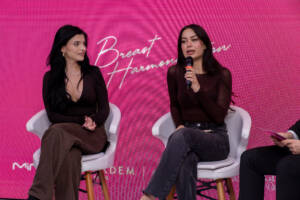
The close, conversational stage layout visible in the photographs supported this approach. Rather than creating distance between speakers and guests, it encouraged dialogue. Breast aesthetics is personal, intimate and often emotionally complex. Trustworthy communication is therefore as important as the technology being discussed.
Breast Cancer Awareness and the Essential Link Between Aesthetics and Health
The inclusion of breast cancer awareness gave the evening one of its most meaningful dimensions. Any platform discussing breast aesthetics should clearly acknowledge that the breast is not merely an aesthetic feature. Routine health care, awareness of bodily changes, discussion of personal and family history and referral to the appropriate medical specialties when needed cannot be separated from aesthetic planning.
Awareness should strengthen responsibility without creating unnecessary fear. An aesthetic consultation does not replace screening or diagnostic care, but it can become an opportunity for women to discuss their health history more openly. During planning, a surgeon may need to review previous imaging, current clinical findings and relevant risk factors, and may request assessment by breast surgery or radiology specialists when appropriate.
Removing the artificial divide between beauty and health also supports a more respectful language around women’s bodies. Aesthetic goals should not invalidate health concerns, and preventive health care should not require women to dismiss personal aesthetic preferences. The event treated both as parts of the same whole. Breast aesthetics was framed not simply as a change in appearance, but as a health-related process requiring informed consent, careful evaluation and long-term follow-up.
Body Image, Confidence and the Importance of Realistic Expectations
The relationship between appearance and confidence is one of the most sensitive areas in aesthetic medicine. A woman may feel uncomfortable with breast volume, shape or asymmetry, find clothing difficult, or wish to reconnect with her body after pregnancy. These concerns are personal and legitimate. At the same time, no procedure should be presented as a solution to every life problem, a guarantee of happiness or a way to automatically repair relationships.
The event’s beauty-science-health framework made expectation management highly visible. In a responsible consultation, the surgeon listens to the desired change, explains anatomical limits, presents comparable outcomes in context and identifies goals that cannot be achieved safely. The patient should also avoid making a decision based only on trends, filters or one person’s experience.
Interest in MIA Femtech and Preservé reflects a wider preference for subtle, proportionate results. “Natural” is not one standard shape; it depends on torso proportions, native tissue, skin elasticity, breast base and personal preference. Technology should support the individual rather than impose a template.
Experience Zones, Beauty Demonstrations, Networking and Live Performance
The evening extended beyond lectures and panels. Experience areas, beauty demonstrations, photo points, networking and live music helped guests build a stronger connection with the programme. These details demonstrated that health communication does not have to feel cold or remote. When ethical boundaries remain clear, sensitive subjects such as breast aesthetics and women’s health can be addressed in a warm, social and participatory environment.
A live make-up demonstration expanded the theme of personal expression beyond surgery. Make-up is immediate and reversible, whereas surgery has medical responsibilities and long-term consequences; the two should never be treated as equivalent. Yet both can reveal how individuals use appearance to express identity. Bringing them into the same event supported a broader understanding of beauty rather than reducing the concept to a single procedure.
The live performance, recognition moments and networking photographs created a community-focused conclusion and suggested new connections between medical technology, clinical practice, media and women-centred communication. Such collaboration can generate education and awareness beyond the event itself.
Istanbul as a Meeting Point for Next-Generation Health Technology
Istanbul has become a major international centre for aesthetic surgery because of its transport links, private hospital infrastructure, experienced professionals and multilingual services. Maintaining that position, however, depends on more than procedure volume. It requires scientific standards, transparent communication, high-quality events and a sustained commitment to patient safety.
“A New Era in Breast Aesthetics” added an educational and intellectual dimension to Istanbul’s medical tourism identity. Presenting new technology, sharing clinical experience and discussing women’s health awareness in one programme helps position the city not only as a destination for treatment, but also as a place where knowledge is produced and new conversations begin.
For international patients, trust begins before arrival. Accurate website content, clear information about the surgeon, suitability-led consultation, facility transparency and a defined follow-up system are critical. Physical events reinforce digital trust through the quality of answers, specialist attitudes and organisational standards.
Questions Women Should Ask When Evaluating New Breast Aesthetics Technology
A decision about MIA Femtech, Preservé or any other breast procedure should not be based only on slogans such as “smaller incision”, “quick recovery” or “natural results”. An informed patient needs to understand what the method means for her own body. The surgeon’s specialist qualifications and platform-specific training, the standards of the medical facility, implant registration, anaesthesia planning, emergency protocols and follow-up must be considered together.
The following questions should be discussed clearly during consultation:
- Why is this method suitable or unsuitable for my anatomy and the change I want?
- What are the alternatives, and how do their advantages and limitations compare?
- What incision, implant plan, anaesthesia approach and recovery should I expect in my individual case?
- What risks, warning signs and possible revision scenarios should I understand?
- Which examinations, imaging studies or laboratory tests are required before treatment?
- How will in-person and remote follow-up be managed after the procedure?
- How are implant or device registration, warranty and patient documentation handled?
- How is the appearance expected to change during the first weeks and over the longer term?
Clear answers help distinguish patient-centred application from technology-led marketing. By combining knowledge and experience on one stage, the event supported this questioning mindset. Women should be active participants who access information, compare options and understand trade-offs, rather than passive recipients of promotional claims.
Lessons for Responsible Communication in Aesthetic Medicine
The event also offered lessons for aesthetic medicine communication. Innovation should be explained through suitability, limits and realistic outcomes rather than exaggerated promises. Social media can build awareness, but personal stories must remain individual experiences, not universal predictions or substitutes for health information.
Third, breast cancer awareness should not be reduced to a symbolic colour or short message. Communication should encourage women to know their bodies, maintain appropriate health checks and seek specialist assessment when they notice a concern. Fourth, visual representation should move beyond one body ideal and include a wider range of ages, body types and life experiences.
Finally, clinical authority and participant experience must remain balanced. Dr Yakup Işık’s role as host placed specialist knowledge at the centre, while the panels and social spaces allowed other voices to be heard. This showed that an event can preserve medical credibility without ignoring the human experience.
Conclusion: The New Era Is a Change in Approach, Not Only a Change in Technology
“A New Era in Breast Aesthetics: MIA Femtech & Preservé” represented more than the arrival of next-generation platforms. Concepts such as smaller access, tissue preservation and faster early recovery naturally attract attention, but the deeper message of the night was the need for a more personal, respectful and informed relationship with women’s bodies.
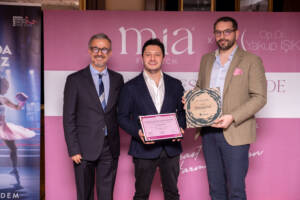
Hosted by Dr Yakup Işık under Dr Emre İlhan Clinic at Swissôtel The Bosphorus, the event combined scientific development, lived experience, breast health awareness and social interaction. Panels, experience zones, recognition moments and live performance transformed the programme from a sector presentation into a broader awareness platform.
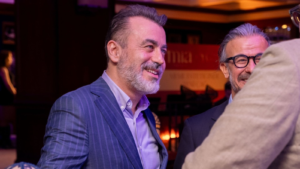
MIA Femtech and Preservé symbolise the rise of tissue-conscious and personalised planning in breast aesthetics. No technology, however, can replace appropriate candidate selection and qualified medical judgement. The best outcome does not come from the popularity of a procedure. It comes from a plan aligned with the individual’s anatomy, medical history and realistic goals.
The strongest idea left by the evening was therefore simple: women’s health and aesthetics are not opposing subjects. When accurate information, ethical communication and medical responsibility remain central, beauty, science and health can meet at the same table in a meaningful way.
Frequently Asked Questions
What is MIA Femtech?
MIA Femtech is officially described as a minimally invasive breast harmonisation approach intended for selected patients. It focuses on proportionate enhancement, tissue preservation and avoiding a visible scar on the breast. Suitability must be determined by a qualified plastic surgeon.
What is Preservé?
Preservé is a lower-impact breast enhancement approach designed to preserve native tissue, anatomical support and sensation as much as possible. The implant plan and any additional procedures are personalised according to anatomy and goals.
Are MIA Femtech and Preservé the same procedure?
No. They share a tissue-conscious philosophy, but their objectives, access plans and candidate profiles are not identical. MIA is commonly associated with subtle harmonisation, while Preservé may be considered in selected cases requiring broader implant planning.
Are these approaches suitable for everyone?
No. Significant sagging, major volume goals, complex asymmetry, previous surgery or medical contraindications may require another procedure. Suitability can only be established after a detailed medical assessment.
Why did the event include breast cancer awareness?
Because the breast is not only an aesthetic feature. Health history, appropriate checks and referral to relevant specialists must remain part of responsible planning. The awareness content reminded guests that aesthetic consultation does not replace screening or diagnostic care.
Can influencer experiences guide a medical decision?
They may provide insight into emotions, logistics and recovery, but they cannot predict another person’s result. Every body and medical history is different. A personal story never replaces examination and specialist advice.
What should I check before choosing a new breast technology?
Review the surgeon’s qualifications and specific training, the medical facility, implant registration and warranty, anaesthesia plan, explanation of risks, follow-up protocol and whether alternatives are discussed transparently.
What does a natural result mean?
Natural does not refer to one standard shape. It means an outcome that works with the patient’s torso proportions, native tissue, skin elasticity, breast base and preferences, with transitions and movement that do not appear artificial.
How can a personalised assessment begin?
A prospective patient can provide unfiltered photographs from appropriate angles, basic health information, previous surgery details and her desired change for an initial review. The final plan is confirmed after medical examination and any necessary investigations.
| This article is provided for general information. Suitability for MIA Femtech, Preservé or any breast aesthetics procedure can only be determined through an individual medical assessment by a qualified plastic surgeon. |