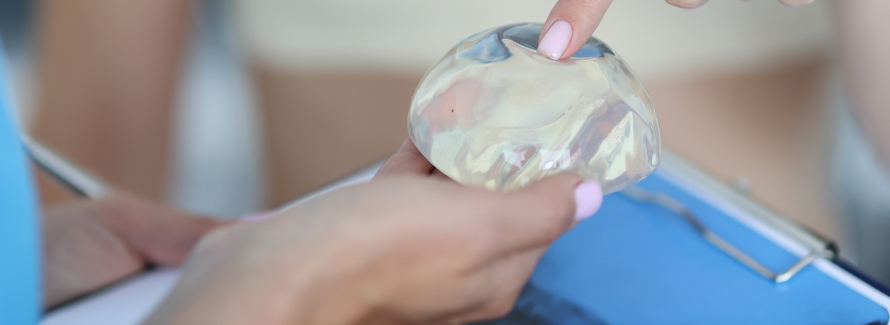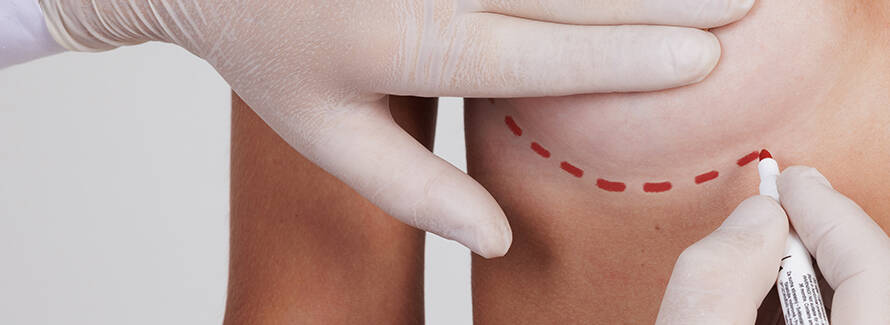

In recent years, women considering breast augmentation have been hearing two very different phrases again and again: Mia Femtech and traditional breast implants. While both options involve increasing breast volume with implants, they differ significantly in approach, technology, recovery time, and overall cost structure.
As we move into 2026, more patients are asking not only “Which one looks better?” but also “What does it really cost?” and “How will my body feel in the days, weeks and years after surgery?”
This guide compares Mia Femtech vs traditional breast implants in terms of:
- Procedure and level of invasiveness
- 2026 cost expectations and what really affects the price
- Short- and long-term recovery
- Which patient profiles might benefit more from each method
It is written with international patients in mind, especially those considering treatment with Dr. Yakup Işık in Istanbul.
If you are already comparing both options and want feedback on your specific case, you can contact his team directly:
👉 Chat with Dr. Yakup Işık’s team on WhatsApp
1. Core concept: what is Mia Femtech and how is it different?
Traditional breast implants have been performed for decades. The classical operation usually involves:
- A breast implant surgery under general anesthesia
- An incision in the inframammary fold, around the areola, or sometimes in the armpit
- Creation of a pocket either above or below the muscle
- Placement of a silicone or saline implant
- A recovery period with more discomfort and some restrictions on arm movement and exercise
By contrast, Mia Femtech is part of a new generation of minimally invasive procedures aimed at:
- Small incisions and discreet scars (often hidden in the armpit)
- Breast tissue preservation instead of wide dissection
- Shorter, lighter recovery in the short term
- Subtle, natural results rather than dramatic volume jumps
Official Mia descriptions emphasize: a short “skin-to-skin” time (around 15 minutes), local anesthesia with sedation instead of deep general anesthesia, and a high-tech delivery system that Mia Femtech utilizes to insert implants through a very small channel with minimal trauma to the breast itself. This is fundamentally different from many older, more aggressive techniques.
In simple terms:
- Traditional breast implants = classic, versatile, can achieve large volume changes, but typically with bigger incisions and more tissue disruption.
- Mia Femtech = focused, controlled, smaller volume changes with a strong focus on preservation, speed and subtlety.
2. Cost in 2026: Mia Femtech vs traditional implants
2.1. Traditional breast implant pricing in Turkey
Standard traditional breast augmentation in Turkey (using modern implants, general anesthesia and a reputable private hospital) is typically more affordable than in Western Europe or the USA. By 2025, multiple cost guides show average prices around:
- $3,200–$5,000 for primary augmentation in quality hospitals in Istanbul, depending on:
- implant brand and model
- hospital category
- surgeon’s experience
- whether packages include hotel and transfers for medical tourism
By 2026, modest price increases are expected, but this range remains a good reference point for a typical, high-quality traditional breast implant operation.
2.2. Mia Femtech cost in 2026
When we talk about Mia Femtech cost in 2026, we are essentially looking at:
- The baseline of standard augmentation prices in Turkey
- Plus a premium for the Mia platform, its high-tech devices, and the specific training required
- Plus any package elements tied to international patients
As a result, Mia Femtech usually sits above standard augmentation in each country’s price ladder. For Istanbul in 2026, you can reasonably expect:
- Mia to cost more than a basic traditional augmentation with standard implants
- But still less than the equivalent Mia procedure in the UK, Western Europe or the US—thanks to Turkey’s lower medical cost base and strong competition among top clinics
Because clinics rarely publish a single fixed “Mia price in 2026” online, the most accurate way to understand where you fall within the prices of Mia is to request a personalized estimate based on your photos and medical history:
👉 Ask Dr. Yakup Işık’s team for an up-to-date Mia vs traditional quote
2.3. Why Mia is usually more expensive than traditional implants in the same clinic
Several elements push Mia Femtech cost in 2026 above the traditional surgery price in the same hospital:
- Technology premium
Mia is not just “another implant”; it comes with dedicated devices, protocols and often next-generation implant families using advanced silicone gel and shell designs. - Training and protocol adherence
The mia femtech procedure must be performed within a very precise framework. Surgeons invest time and resources into learning and applying this framework properly. - Positioning and value perception
Mia is marketed as a sophisticated, lifestyle-friendly option, emphasizing minimal scars, fast recovery and modern imaging compatibility (often MRI conditional). This naturally places it in the premium segment.
That said, for many patients, the difference in Mia Femtech cost in Turkey 2026 compared with traditional augmentation is justified by lifestyle priorities and long-term peace of mind.
3. Process and experience: what does the surgery feel like?
3.1. Traditional breast implants – process overview
A typical traditional breast implant journey includes:
- Consultation & planning
- Discussion of goals, sizes and shapes
- Selection of implant type (round vs anatomical, profiles, volume)
- Explanation of incisions and placement (subglandular, submuscular, dual plane)
- Surgery day
- General anesthesia
- Incision (breast fold, areola or axilla)
- Pocket creation by dissecting tissue
- Implant placement and closure
- Immediate post-op
- Several hours in recovery
- Pain, tightness and limited arm movement
- Restrictions on driving, lifting and exercise for weeks
- Recovery
- Most patients require at least 1–2 weeks off from work (depending on their job)
- Full adaptation of the implants can take months
- Some residual tightness or altered sensation in the short term
3.2. Mia Femtech – process overview
While every clinic’s details differ slightly, the overall Mia Femtech journey is built around the idea of minimal disruption:
- Pre-assessment
- Discussion of conservative, natural goals (Mia is not for very large volume changes)
- Evaluation of breast shape, skin and expectations
- Explanation of how Mia works differently from a traditional breast augmentation
- Day of the Mia Femtech procedure
- Local anesthesia combined with sedation
- Small incision in the armpit—no cut on the breast itself
- Use of a patented device that creates a narrow channel into which the implant is delivered
- Typical “skin-to-skin” time around 15 minutes in many official descriptions
- Immediate post-op
- Observation in the clinic for a short period
- Many patients feel clear-headed faster because there is no deep general anesthesia
- In some Mia protocols, patients can return to everyday activities within hours, with guidance from the surgeon
- Recovery time
- Generally less intense initial pain and tightness compared with more invasive methods
- Most patients can move their arms and resume gentle tasks earlier
- Heavy exercise is still postponed until tissues adapt, but the day-to-day burden tends to be lighter
In practice, the Mia experience often appeals to women who cannot—or do not want to—disappear from family or work life for several weeks.
4. Recovery in 2026: side-by-side comparison
4.1. Pain and discomfort
- Traditional implants
- More extensive dissection usually means more pain in the early days.
- Pain medication is often needed, especially when the implant is placed under the muscle.
- Mia Femtech
- Because of the minimally invasive approach and small axillary incision, many patients describe the pain as milder and more localized.
- Over-the-counter pain medication may be sufficient for some, although every body is different.
4.2. Mobility and daily activities
- Traditional implants
- Patients are often advised to avoid lifting their arms above shoulder level and refrain from carrying heavy objects for a couple of weeks.
- Desk work may be possible within 7–10 days, but more active jobs require longer off.
- Mia Femtech
- Designed specifically to minimize downtime.
- Many patients can resume light daily activities within the same or next day (as long as they follow the surgeon’s instructions).
- While exercise and impact sports are still limited for a period, general mobility tends to recover faster.
4.3. Swelling, bruising and aesthetics during healing
- Traditional implants
- Swelling and bruising are common and can be more visible on the chest.
- Initial result may look too high, too firm or “fake” before settling.
- The final shape can take several months to fully stabilize.
- Mia Femtech
- Swelling still occurs (no surgery is “swelling-free”), but many patients experience less visible bruising around the breast itself, since the main access is in the armpit.
- Because breast tissue preservation is a core principle, results can look closer to the final shape earlier—though full integration still takes time.
4.4. Scarring
- Traditional implants
- Scars are usually around 4–5 cm and located in the fold, around the areola or in the axilla.
- With proper care, they fade, but they remain on or near the breast.
- Mia Femtech
- A smaller scar (around 2–2.5 cm) hidden in the armpit.
- The breast itself remains scar-free, which is a strong selling point for many Mia candidates.
5. Who is a better candidate for Mia, and who for traditional implants?
5.1. Ideal Mia Femtech candidates
Mia is usually best suited for women who:
- Want a modest, natural increase in size (not multiple cup sizes)
- Prefer a “my breasts but better” effect instead of a visibly augmented look
- Value a short recovery time and minimal disruption to work and family life
- Place high importance on breast tissue preservation, future imaging and the option of reversibility
- Are comfortable with premium pricing compared to standard augmentation and understand that Mia is not primarily a “cheap” solution, but a modern, lifestyle-oriented one
5.2. Ideal traditional implant candidates
Traditional methods may be better suited when:
- A large volume increase is desired
- The breasts need significant reshaping, lifting or asymmetry correction beyond what Mia’s volume limits can address
- The patient already has older implants and needs a more complex revision or reconstructive strategy
- Budget is the primary concern and the patient prefers the most cost-effective improvement rather than the most advanced system
In some cases, a combined approach or completely different technique might be recommended by the surgeon, especially in complex reconstructive situations.
If you’re unsure which category you fall into, a direct discussion with a surgeon familiar with both methods—like Dr. Yakup Işık—is the safest next step:
👉 Send your photos and goals to compare Mia vs traditional for your body
6. Long-term considerations: safety, imaging and future changes
Regardless of method, any breast implant surgery requires a long-term mindset:
- Regular follow-up with your surgeon
- Proper imaging when recommended (for example, adhering to MRI conditional guidelines where relevant)
- Awareness that future pregnancies, weight changes and aging will also change breast shape
Mia’s emphasis on breast tissue preservation and minimally invasive access may offer psychological comfort for some women who are worried about future imaging, removals or revisions. For others, the flexibility and range of traditional breast augmentation may be more important.
In both cases, modern implants use advanced silicone gel and shell technology, and both categories can be part of sophisticated breast aesthetics and reconstruction plans that evolve over time.
7. How to get a 2026 cost and recovery plan tailored to you
Comparisons on paper are useful, but they can never replace a personalized evaluation. To understand how Mia Femtech vs traditional breast implants look in your real life in 2026, you’ll need:
- Clear goals
- What cup size or visual change do you want?
- How important are scars, downtime and subtlety?
- Medical background
- Any previous breast operations, pregnancies or major weight changes?
- Health conditions, medications or allergies?
- Good quality photos
- Front, profile and three-quarter views in neutral lighting.
- Timing and travel
- When can you come to Istanbul?
- How long can you stay for surgery and early recovery?
With this information, Dr. Yakup Işık’s team can:
- Indicate whether you are closer to an ideal Mia profile or a traditional augmentation profile
- Outline the expected cost for each option in 2026
- Explain your likely recovery time and restrictions for each path
- Help you decide which approach gives you the best balance between aesthetics, lifestyle and budget
You can start that conversation immediately here:
👉 Start your 2026 Mia vs traditional assessment via WhatsApp
Final thoughts
In 2026, the choice is no longer simply “implants or no implants.” For many women, the real question is Mia Femtech vs traditional breast implants—a choice between two different philosophies of breast augmentation:
- One rooted in decades of broader experience and versatility
- The other rooted in ultra-modern, minimally invasive, tissue-preserving design
There is no universal winner. The “better” option is the one that fits your anatomy, your lifestyle and your long-term comfort.
Working with a surgeon who can honestly present both sides—like Dr. Yakup Işık—will help you move beyond marketing promises and towards a clear, realistic plan that respects your body, your budget and your future.