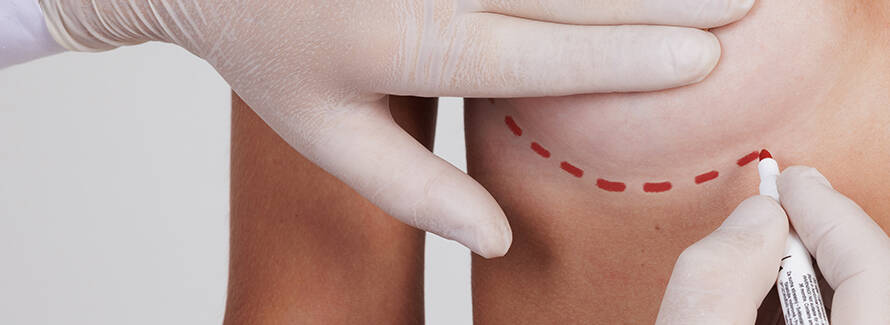

The decision to explant an implant may be based on various reasons, including discomfort, capsular contracture, rupture/deflation, or simply a change in aesthetic preference. On this page, we clearly outline the main surgical techniques, including en bloc and total/partial capsulectomies, which ones are preferred for different anatomical/safety situations, what to expect during the recovery process, and the costs involved. Our goal is to provide a clear framework for asking meaningful questions of your doctor while aligning a safe approach with your personal goals.
Common Reasons (discomfort, rupture, personal choice)
Medical or mechanical concerns
- Capsular contracture: Tightening of scar tissue around the implant causing firmness, distortion, or pain.
- Implant rupture/deflation: Silicone gel rupture or saline deflation; management depends on type, symptoms and imaging.
- Malposition/asymmetry: Bottoming-out, lateral displacement, double-bubble, or animation deformity.
- Pain/neurologic symptoms: Chest wall or nerve-related discomfort requiring assessment and tailored correction.
Personal or aesthetic reasons
- Change in preference: Smaller/larger size, a more natural look, or returning to the pre-implant state.
- Life stage changes: Pregnancy/weight shifts, athletic goals, or lifestyle factors.
- Peace of mind: Some people prefer removal even in the absence of objective implant problems.
If you’re experiencing symptoms—or simply considering a change—book a consult to review options and imaging if indicated: Contact Dr. Yakup Işık.
Surgical Techniques (en bloc, total/partial capsulectomy)
Explant refers to removal of the implant; capsulectomy addresses the surrounding capsule.
- En bloc capsulectomy: Removal of implant and capsule as a single unit when safely feasible. Most feasible in significant contracture or thick capsules; less feasible with very thin capsules, submuscular pockets tightly adherent to chest wall, or when removal risks outweigh benefits.
- Total capsulectomy: Removal of the entire capsule (not necessarily in one piece). Common in contracture, rupture with silicone, or biofilm concerns where anatomy allows safe dissection.
- Partial capsulectomy (capsulotomy/capsulectomy): Removal or release of capsule segments to correct shape, soften the pocket, or prepare for a lift or fat graft; chosen when full removal adds risk without added benefit.
- Pocket change & adjuncts: Conversion to a different plane (e.g., subglandular ↔ dual-plane), suture-based pocket repair, or acellular dermal matrix in selected cases.
Technique choice is individualized—based on your anatomy, implant plane, capsule quality, imaging, symptoms, and goals. The priority is complete, safe removal aligned with risk–benefit.
Want an opinion on which technique suits your case? Book a tailored explant consult.
Risks & Recovery Timeline
Intraoperative/early risks
- Bleeding/haematoma, infection, seroma.
- Skin/soft-tissue compromise (rare), especially after large implants or multiple prior surgeries.
- Temporary changes in sensation.
Recovery overview (typical ranges)
- Days 1–3: Discomfort, bruising, drain care if placed; arm movement limited by comfort.
- Week 1–2: Light daily activity; many return to desk work after medical clearance.
- Week 3–6: Gradual increase in activity; avoid heavy lifting until cleared.
- 3–6 months: Tissue settling, scars maturing; final contour continues to refine.
Your exact timeline depends on technique, pocket work, lift/fat grafting, and your baseline health.
Explant + Lift or Fat Transfer
Following implant removal, the breast envelope may feel deflated or ptotic. To optimise shape, surgeons may combine:
- Mastopexy (lift): Repositions the nipple–areolar complex and tightens the envelope for a perkier contour.
- Autologous fat transfer: Adds volume using your own fat (liposuction → processing → grafting). Often used to soften the upper pole and blend contours after explant.
- Staged planning: Depending on tissue quality, a staged approach (explant then lift/fat later) can improve predictability.
Considering lift or fat graft with removal? Explore options and staging during consultation: Message the clinic.
Costs & What’s Included
Costs vary with technique complexity (en bloc/total vs partial capsulectomy), operating time, pocket repair, concurrent lift or fat transfer, imaging, and aftercare design.
Request an itemised quote and confirm these line items:
- Surgeon’s fee (planning, procedure, early follow-ups)
- Anaesthesia (consultant anaesthetist, drugs)
- Hospital/facility (theatre time, nursing, consumables)
- Pathology (if capsule/implant sent for analysis)
- Adjunct procedures (lift, fat transfer, pocket change)
- Post-op care (reviews, dressings, garments, scar therapy timing)
- Imaging (US/MRI if indicated), and its cost pathway
- Revision policy (what’s covered, window, exclusions)
If you’re evaluating multiple clinics, use a line-item checklist so you’re comparing like-for-like rather than headline totals.
For a transparent, line-item quote: Start your estimate.
How to Choose a Surgeon for Explant
Experience that matters
- Explant volume & technique range: Ask how often they perform total/en bloc removal and how they decide among techniques.
- Pocket management skills: Ability to correct malposition and rebuild support when needed.
- Combined procedures: Comfort with lift or fat transfer in the same sitting vs staged.
Safety and communication
- Clear consent & documentation (risks, benefits, alternatives).
- Imaging pathways (when US/MRI is indicated).
- Aftercare access (who you contact out-of-hours, how revision is handled).
Outcome evidence
- Before/after of explant, not just augmentations; cases similar to your anatomy.
- Willingness to discuss limitations and what outcome is realistic for you.
Ready to meet a consultant and review your case? Book now.
FAQs
Is en bloc always possible?
Not always. En bloc means removing the implant and capsule as one unit. It’s feasible when capsules are thick and safely separable; but in thin or adherent capsules (e.g., areas close to the ribcage) forcing en bloc can increase risk. Your surgeon will aim for the safest complete removal that matches your anatomy and goals—often total capsulectomy is the practical, safe equivalent when true en bloc isn’t achievable.
How long is downtime after implant removal?
Many desk-based patients resume light work after 1–2 weeks (with surgeon clearance). More physical jobs or combined procedures (lift/fat graft) may require longer. Exercise and lifting restrictions are typically eased gradually over 3–6 weeks, with tissues continuing to settle for months.
Will I need a lift after explant?
It depends on skin quality, pre-op size, duration of implants, and your preferred shape. If upper-pole fullness or nipple position is a priority, a lift and/or fat transfer may be recommended in the same sitting or as a staged plan.